

 Nyah Eliud

Check the checkout before you touch the marketing
When sales are flat the instinct is to buy more visitors. That is the expensive answer and usually the wrong one. If a hundred people arrived and none bought, the hundred were not the problem.
Open your own store on your phone, on mobile data, away from your wifi, and buy something. Time it. Count the taps. That five-minute exercise finds more lost revenue than a month of extra advertising.
The five places orders are lost here
- The checkout does not take mobile money, so most customers stop at the last step
- Delivery cost appears only at the end, and it is a surprise
- The site asks people to create an account before they can pay
- Product photographs are too dark or too few to decide from
- The page is slow on mobile data, so people leave before it finishes loading
In this market the first two account for most of it, and both are fixable in a day.
Show the delivery cost early
A customer who reaches the payment step and discovers the delivery charge feels caught out, and a surprised customer does not buy. Put the rate on the product page, or a zone estimate at the least. You will lose a few people earlier and keep more of the ones who continue.
Answer the trust questions the page is not answering
Somebody buying from an unfamiliar store is asking three silent questions: is this a real business, what happens if the item is wrong, and can I reach a human. Most stores answer none of them.
- A real address and a phone number that gets answered
- A returns rule in plain language, even if it is strict
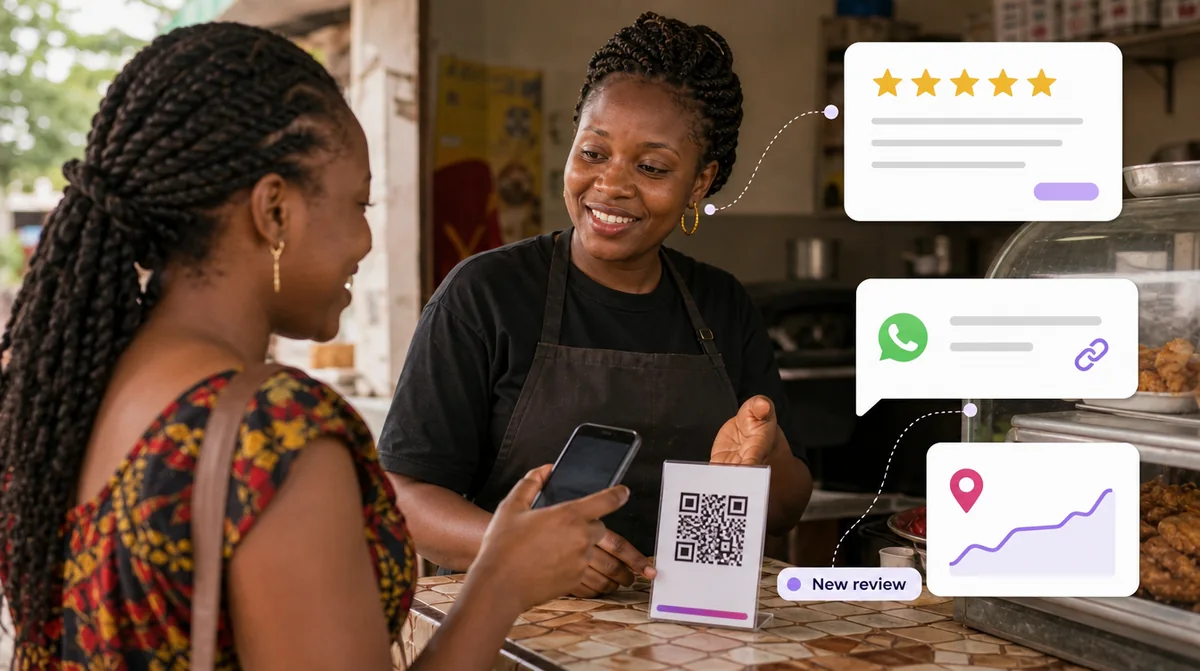
- A WhatsApp link, because here that is what people trust more than a form
- Reviews from people who bought, in their own words
A cheap fix worth doing todayPut your WhatsApp number on the product page. A share of your visitors will never buy through a checkout, and they will happily buy through a conversation.
What the research says, and what to fix first
The Baymard Institute, which has studied checkout behaviour across 50 studies, puts average cart abandonment at about 70 percent. In its survey of shoppers in the United States, the top reason for leaving at checkout was extra costs, such as delivery, that were too high, followed by slow delivery, distrust of the site with payment details, and being forced to create an account.
| Problem | What to change |
|---|---|
| Delivery cost appears late | Show the zone rates on every product page |
| No mobile money | Add MTN and Orange at checkout |
| Account required | Allow checkout as a guest |
| Not enough trust | Real photos, reviews, an address, a WhatsApp number |
| Slow on a phone | Compress images and trim plugins |
| Too many steps | Remove every field you do not need |
The market here is different, but the pattern holds: surprises and friction at the end lose sales that were already won.
Then, and only then, buy more traffic
Once the store converts the visitors it already has, advertising becomes an investment instead of a leak. The order matters: fixing the checkout raises the value of every visitor you will ever pay for, while more traffic to a broken checkout simply buys the same failure at a larger scale.
Go further: the selling online guide, our online store service, store prices, or taking mobile money.
Questions people ask
Baymard Institute's average across 50 studies is about 70 percent, so most carts are abandoned everywhere. What matters is reducing the reasons that are within your control, such as surprise delivery costs.
Only if your margin can carry it. A clear, fair delivery price shown early usually works better than free delivery that quietly eats every order's profit.
Your store dashboard shows abandoned carts, and Google Analytics can show where people drop off between product, cart and checkout. Then buy something yourself on a phone and note every moment of friction.

Comments
No comments yet.Be the first to add one. We read every comment and reply to the ones that ask something real.
Leave a comment
Thank you. It will appear once we have read it, usually the same working day.