

 Nyah Eliud
Start where your customers already are
Almost every successful online seller here started in a WhatsApp thread or an Instagram comment section, not on a website. That is not a failure of ambition. It is the sensible order, because it proves people will pay you before you spend money finding out.
If you are already selling through messages, you have the only thing that matters: demand. The website comes next, and its job is to remove the work you are currently doing by hand.
If you are not selling yet, do that first. Post the product, quote a price, take an order, deliver it. A shop full of products nobody has ever asked for is an expensive way to learn what people do not want.
Work out what a sale actually costs you
This is the step people skip, and it is the one that decides whether the business works. Before you build anything, write down what one sale costs to fulfil.
- What you paid for the item
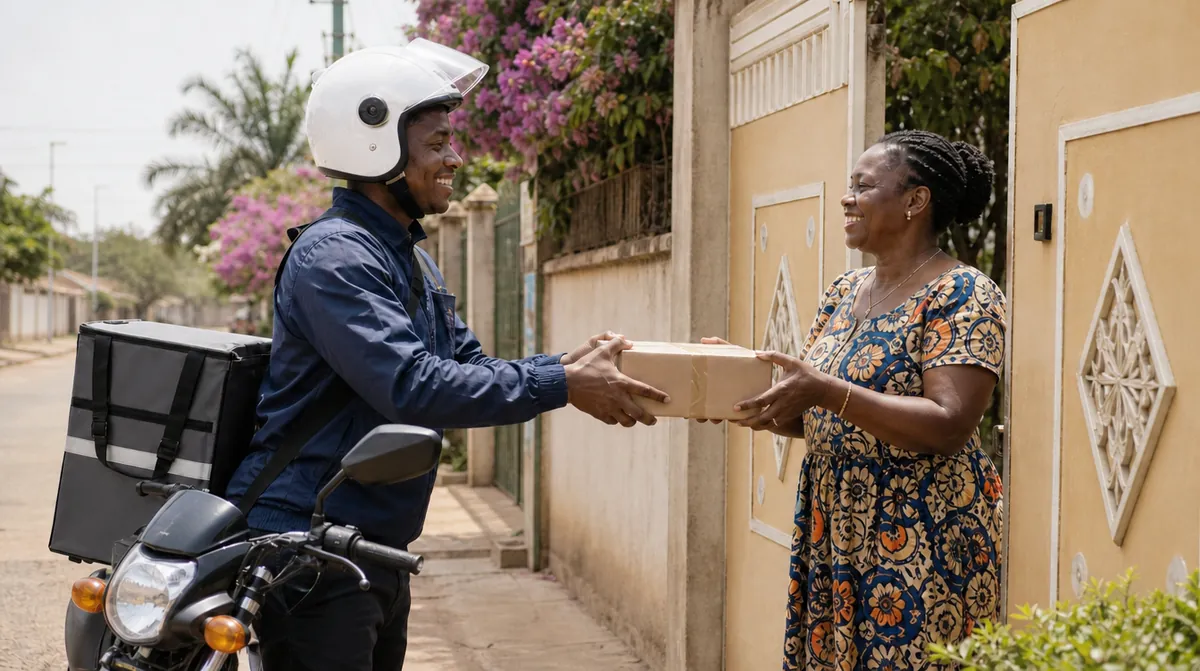
- What delivery costs you, not what you charge for it
- The mobile money or bank fee on the payment
- Packaging
- The time somebody spends confirming, packing and following up
Subtract that from your price. If what is left is thin, selling online will not fix it, it will multiply it. Fix the margin before you fix the storefront.
The number that matters mostDelivery is the one people get wrong. Charging a flat rate across a city where one drop is fifteen minutes away and another is two hours is how a busy month ends up losing money.
Take mobile money from day one
A checkout that only accepts cards is a checkout most of this country cannot use. MTN Mobile Money and Orange Money are how people pay, and a store that does not accept them is asking a customer to abandon the order and message you instead, which puts you back to doing it by hand.
Cash on delivery has its place, and plenty of Cameroonian sellers still rely on it, but it carries a cost people underestimate: refused deliveries. You have paid for the trip either way.
The pattern that works is mobile money as the default, card and transfer for customers abroad, and cash on delivery only where you know the area and the failure rate is low.
Photograph the products properly, because that is the whole shop
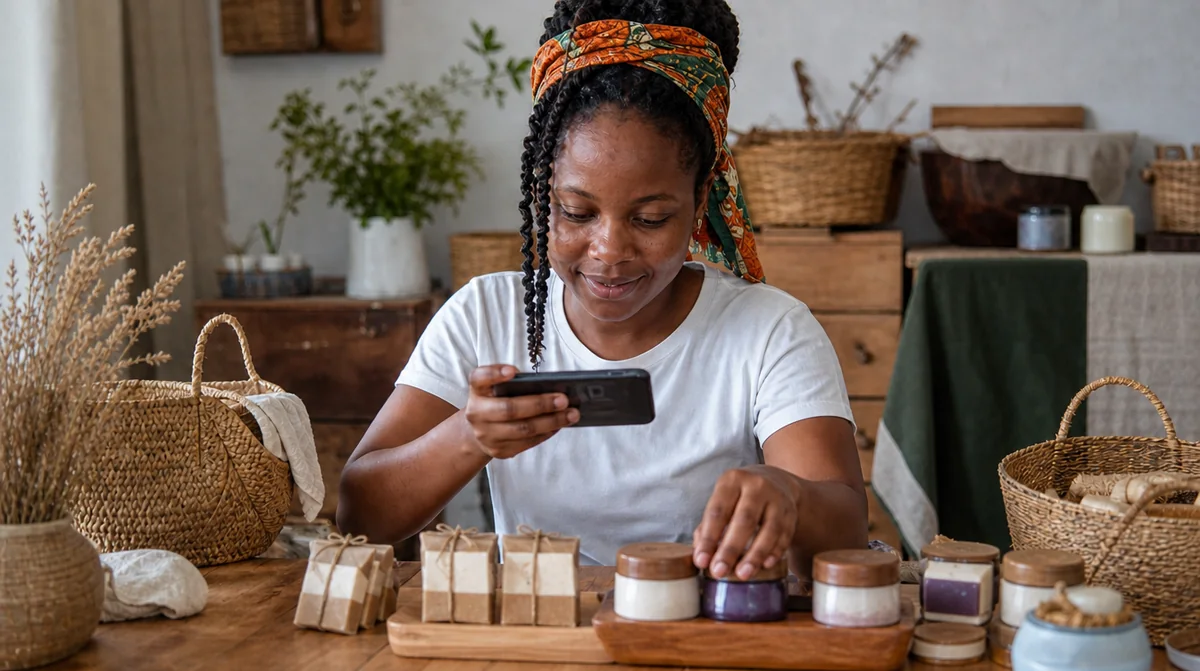
Online, the photograph is the product. Nobody can pick it up. A phone camera is genuinely fine. What is not fine is a dark picture on a patterned bedsheet with your hand in the frame.
- Daylight, near a window, no flash
- One plain background, the same one for every product
- Three or four angles, and one showing scale next to something familiar
- The same crop and size every time, so the shop looks like a shop
This is the highest-return afternoon of work in the entire project, and it is the part you can do yourself before anyone builds anything.
From WhatsApp to a store, in stages
You do not have to jump straight to a full store. Most sellers move through these stages, and each one tells you when to move to the next.
| Stage | What you use | Move on when |
|---|---|---|
| 1. Selling in messages | WhatsApp Business with a catalogue | You answer the same questions all day |
| 2. A simple catalogue site | A small website with products and a WhatsApp order button | Taking payment by hand slows you down |
| 3. A full store | WooCommerce or Shopify with mobile money and delivery zones | Orders are steady and you want them to run without you |
A single-page site with us is 80,000 FCFA and can work well as stage two. Full online stores start at 600,000 FCFA, because that is where payments, stock and delivery come in.
Then build the store, and keep it boring
By the time you build, you know what sells, what it costs to deliver, and how people want to pay. The store becomes a straightforward job: a catalogue, a checkout that takes mobile money, delivery zones with honest rates, and a page that tells somebody where their order is.
Resist the urge to make the checkout interesting. Every extra field, account requirement or clever step is a place where somebody who wanted to buy from you decides not to.
Go further: the selling online guide, our online store service, store prices, or taking mobile money.
Questions people ask
To open a merchant account for mobile money or card payments, providers usually ask for business documents. Check the requirements with the payment provider you plan to use before building the store.
Very little at stage one: WhatsApp Business is free. A simple catalogue site with us is 80,000 FCFA, and a full store with mobile money starts at 600,000 FCFA.
Products people already ask about in messages, that photograph well, and that can be delivered without breaking. Your own WhatsApp questions are the best guide to what to list first.



Comments
No comments yet.Be the first to add one. We read every comment and reply to the ones that ask something real.
Leave a comment
Thank you. It will appear once we have read it, usually the same working day.