

Last updated on July 30th, 2026 at 09:01 pm
What is Search Engine Optimization (SEO)?
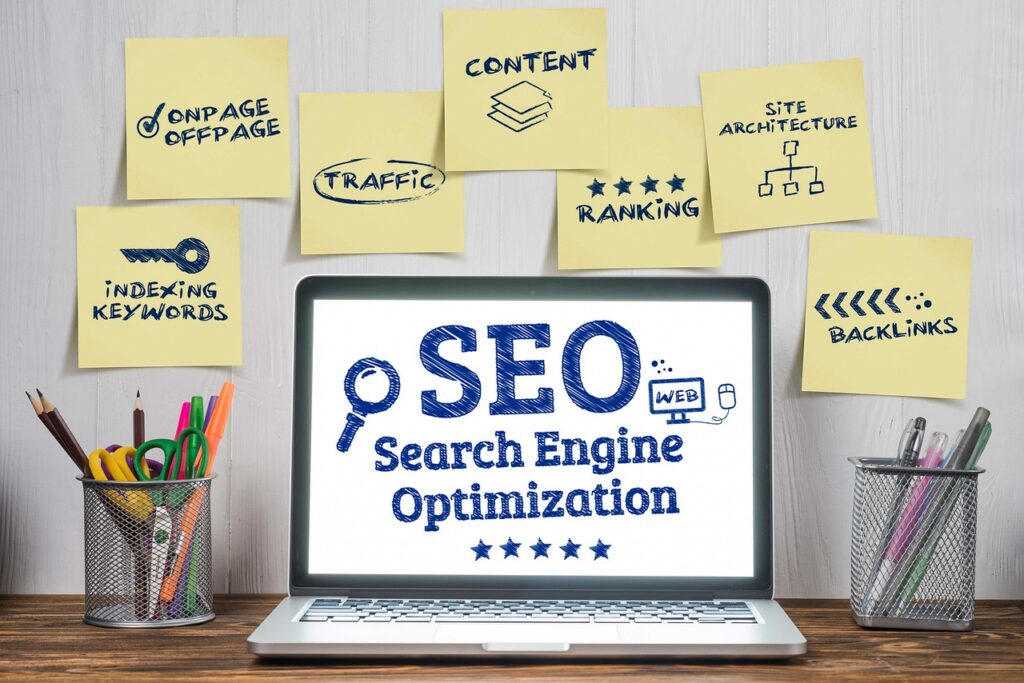
Every time someone searches for a product, service, or answer online, search engines decide which websites are worth showing them. SEO (search engine optimization) is how you influence that decision in your favor.
At its core, SEO means optimizing your website so it ranks higher in search engine results pages (SERPs). When someone searches for something relevant to your business, you want to appear near the top — because that’s where the clicks go. The vast majority of users never scroll past the first page of results.
Search engines like Google maintain a massive index of websites and use complex algorithms to determine which pages are most relevant and authoritative for any given query. SEO helps your website communicate clearly with those algorithms — making it easier for Google to understand your content, trust your site, and recommend it to searchers.
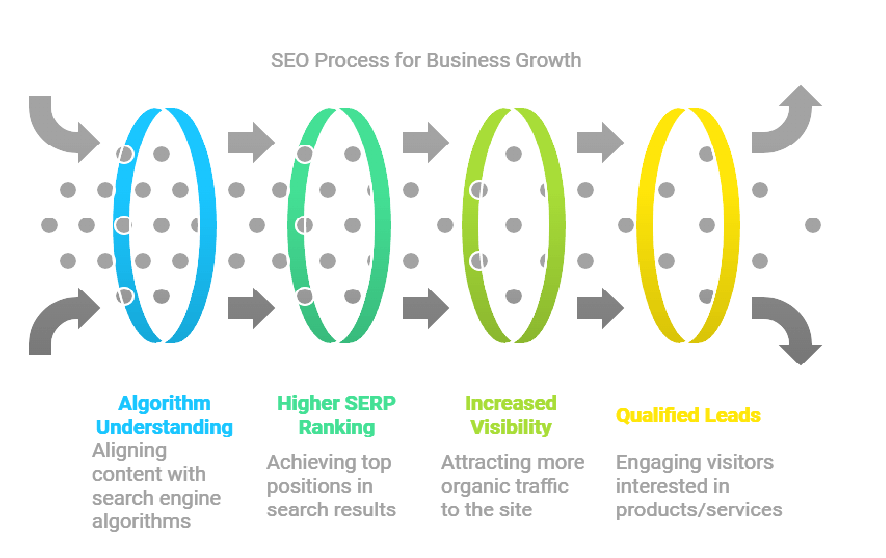
Organic traffic — visitors who arrive from search results rather than paid ads — is among the most valuable traffic you can earn. These are people actively seeking what you offer. Higher rankings mean more visibility, more qualified leads, and compounding business growth over time without paying per click.
This guide covers the full picture: the three types of SEO, keyword research, on-page and off-page optimization, technical foundations, how to measure results, and the best practices that drive long-term success. Whether you’re a business owner building your online presence or a marketer expanding your skill set, what follows gives you a practical, comprehensive foundation.
Types of SEO: On-Page, Off-Page, and Technical
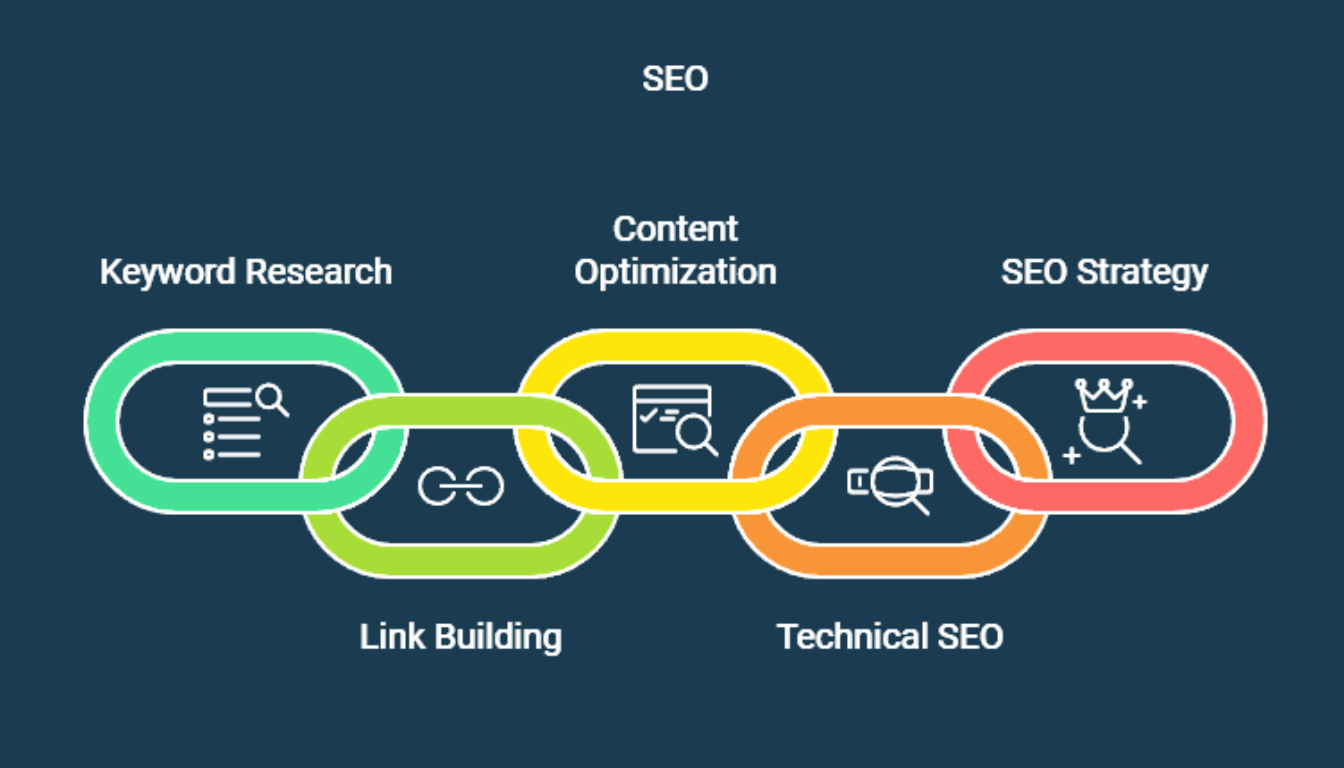
SEO is a collection of techniques that work together to improve your website’s visibility. Three distinct disciplines make up the whole:
On-Page SEO
On-page SEO focuses on optimizing the elements within your website itself — the content, structure, and HTML that search engines read when they crawl your pages. Key elements include:
- Keyword research and targeting: Identifying the words and phrases your target audience uses to search for information related to your business.
- Content optimization: Creating high-quality, relevant, and engaging content that satisfies user search intent and incorporates target keywords naturally.
- Title tag and meta description optimization: Crafting compelling title tags and meta descriptions that accurately summarize your page’s content and entice users to click.
- Header tag optimization: Using header tags (H1, H2, etc.) to structure your content hierarchically, making it easier for both users and search engines to understand.
- Image optimization: Optimizing images with descriptive file names and alt text to improve page load speed and accessibility.
Off-Page SEO
Off-page SEO is about what happens outside your website. It focuses on building your site’s authority and reputation through external signals — primarily backlinks from other websites, social signals, and brand mentions across the web. These signals tell search engines that other sources trust and value your content.
- Link building: Acquiring high-quality backlinks from other reputable websites. Backlinks act as votes of confidence, signaling to search engines that your content is valuable and trustworthy.
- Social media marketing: Promoting your website and content on social media platforms to increase brand awareness and drive traffic.
- Brand mentions: Monitoring and encouraging mentions of your brand across the web, which contributes to your site’s authority and visibility.
Technical SEO
Technical SEO focuses on the infrastructure of your website — ensuring search engines can crawl, index, and understand your content without friction. It’s the foundation everything else sits on.
- Website speed and performance: Optimizing your website’s loading speed to provide a positive user experience.
- Mobile-friendliness: Ensuring your website is responsive and displays correctly on all devices.
- Site architecture and crawlability: Creating a clear and logical site structure that makes it easy for search engines to navigate and understand your website.
- Structured data: Implementing structured data markup to help search engines understand the content on your pages.
- XML sitemaps: Creating and submitting XML sitemaps to help search engines discover and index all the pages on your website.
| Type of SEO | Focus | Key Elements | Benefits |
| On-Page SEO | Optimizing elements within your website | Keyword research & targeting – Content optimization – Title tag & meta description optimization – Header tag optimization – Image optimization | Improved search engine rankings – Increased organic traffic – Better user experience |
| Off-Page SEO | Building authority and reputation through external signals | Link building – Social media marketing – Brand mentions | Increased website authority – Improved brand reputation – Wider audience reach |
| Technical SEO | Optimizing website infrastructure for search engine crawlers | Website speed & performance – Mobile-friendliness – Site architecture & crawlability – Structured data – XML sitemaps | Improved crawlability & indexability – Enhanced user experience – Better website performance |
All three types of SEO work together. Strong on-page content without technical SEO is like a great book with a broken spine. The most effective SEO strategies address all three.
Keyword Research: The Foundation of SEO Success
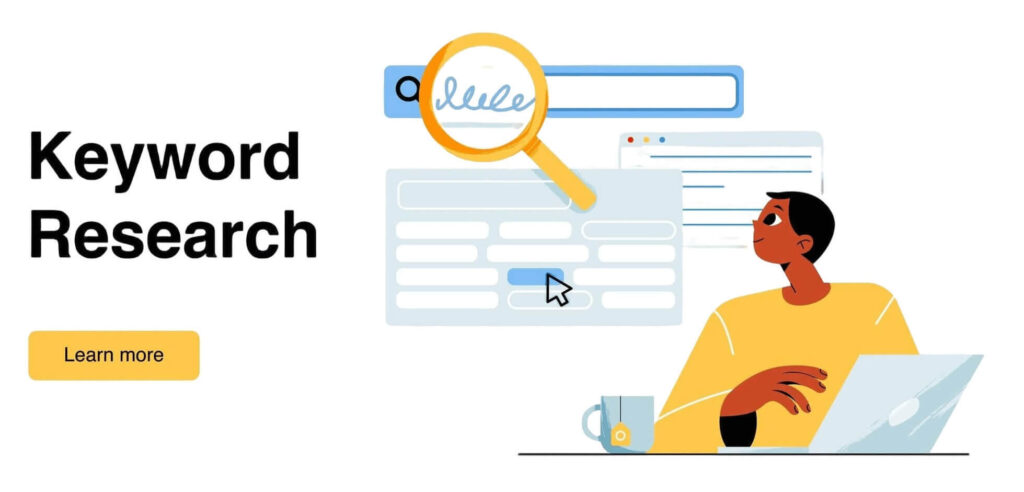
Keyword research is how you find out what your audience is actually searching for — the exact words and phrases they type into Google when looking for what you offer. Without it, you’re creating content and hoping it finds an audience. With it, you build content around proven demand.
Effective keyword research reveals not just what people search for, but how they search, how often, and what they expect to find. That intelligence shapes your content strategy, your site architecture, and your competitive positioning.
Understanding Search Intent
Before selecting keywords, understand the intent behind them. Google’s primary goal is matching users with the most relevant results — content that misaligns with intent won’t rank well even if it targets the right keywords. There are four main types of search intent:
- Informational: The user is seeking information. (Example: “What is SEO?”)
- Navigational: The user wants to find a specific website or page. (Example: “Facebook login”)
- Transactional: The user wants to buy something. (Example: “buy iPhone 15”)
- Commercial: The user is researching before making a purchase. (Example: “best SEO tools”)
Keyword Research Tools
Several strong tools make keyword research systematic rather than guesswork:
- SEMrush: A comprehensive SEO toolkit with powerful keyword research features, competitor analysis, and more.
- Ahrefs: Another robust toolset with a strong focus on keyword research, backlink analysis, and rank tracking.
- Moz Keyword Explorer: Offers keyword suggestions, difficulty scores, SERP analysis, and other helpful features.
- Google Keyword Planner: A free tool from Google that provides keyword ideas, search volume estimates, and competition data.
Finding Relevant Keywords
Start by thinking from your audience’s perspective. What words or phrases would they use to find your content, products, or services? Then use your research tools to expand, validate, and prioritize those ideas:
- Start with seed keywords: Begin with a few broad keywords related to your business or niche.
- Use keyword variations: Explore different variations, including singular/plural forms, synonyms, and related terms.
- Analyze competitor keywords: See what keywords your competitors are ranking for and identify opportunities.
- Consider long-tail keywords: Longer, more specific phrases often have lower competition and higher conversion rates.
Analyzing Keyword Difficulty and Competition
Not all keywords are worth pursuing equally. Most keyword research tools provide a keyword difficulty score that estimates how hard it is to rank for a particular term. Evaluate each keyword across three dimensions:
- Search volume: The number of monthly searches for a keyword.
- Competition: The number and quality of websites competing for that keyword.
- Domain authority: The authority level of sites currently ranking for that keyword.
The best opportunities sit at the intersection of meaningful search volume, manageable competition, and clear alignment with your content strengths.
Mastering On-Page Optimization
On-page optimization is where keyword research becomes content. It’s the process of structuring and writing your pages so they clearly communicate relevance to search engines while genuinely serving the people who read them.
Creating High-Quality, Relevant Content
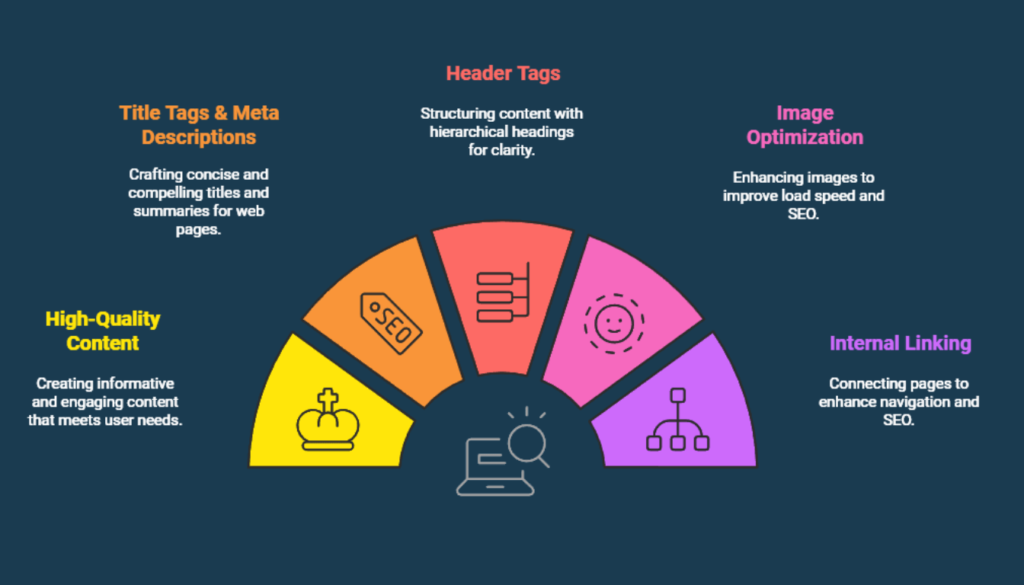
Content quality is the single most important on-page factor. Search engines prioritize high-quality, relevant content that genuinely serves users — content that answers their questions, solves their problems, and delivers more value than competing pages. Match your content format to the intent behind each keyword.
- Focus on user intent: Understand what users are looking for and tailor your content accordingly.
- Provide original and valuable information: Offer unique insights rather than rehashing what already exists.
- Structure your content logically: Use headings, subheadings, bullet points, and images to improve readability.
- Write clearly and concisely: Avoid jargon and overly complex sentences.
- Keep your content up-to-date: Regularly update your content to ensure it remains accurate and relevant.
Optimizing Title Tags and Meta Descriptions
Title tags and meta descriptions are your listing in search results — they’re what users see before they decide whether to click. A strong title tag is concise, includes the primary keyword, and signals clearly what the page is about.
| Element | Best Practices |
| Title Tag | -Keep it concise (under 60 characters) -Accurately describe the page’s content -Include relevant keywords -Make it compelling and clickable |
| Meta Description | -Keep it concise (under 160 characters) -Summarize the page’s content -Include a call to action (optional) -Use relevant keywords (naturally) |
Using Header Tags Effectively
Header tags (H1, H2, H3, etc.) structure your content for both readers and search engines. They signal hierarchy and help Google understand the logical flow of your page.
- H1: Use only one H1 tag per page, and make it the main heading of your content.
- H2: Use H2 tags for subheadings that break down your main topic into smaller sections.
- H3-H6: Use these tags for further subheadings and to organize your content hierarchically.
Optimizing Images for SEO
- Use descriptive file names: Instead of “image1.jpg,” use a descriptive name like “keyword-rich-filename.jpg.”
- Optimize alt text: Write descriptive alt text that helps search engines understand the image and improves accessibility.
- Compress image size: Large files slow down page load times. Compress images without sacrificing visible quality.
Internal Linking Strategies
Internal links connect pages within your website, helping users navigate and helping search engines understand how your content is organized. They also distribute link equity across your site.
- Relevance: Link to pages that are genuinely related to the current page’s content.
- Anchor text: Use descriptive anchor text that includes relevant keywords naturally.
- Link placement: Place links naturally within your content rather than forcing them in.
User Experience (UX) Considerations
User experience is a direct ranking factor. Pages that frustrate users don’t hold rankings. The UX factors that matter most for SEO:
- Page load speed: Users expect fast-loading pages — and Google measures it through Core Web Vitals.
- Mobile-friendliness: Your website should be accessible and easy to navigate on all devices.
- Readability: Clear language, logical structure, and visual hierarchy make content easier to consume.
- Navigation: A clear site structure helps visitors find what they need and reduces bounce rates.
Building Authority with Off-Page Optimization
Off-page optimization is about how the rest of the internet perceives and references your website. While on-page SEO establishes what your site is about, off-page SEO establishes how much it can be trusted. Search engines use external signals — primarily backlinks — as proxies for quality and authority.
The Importance of Backlinks
Backlinks are links from other websites pointing to yours. They function as endorsements — when a reputable site links to your content, it signals to search engines that your content is worth recommending. The factors that determine a backlink’s value:
- Relevance: Backlinks from websites in your industry carry more weight than those from unrelated sites.
- Authority: Links from high-authority websites are more valuable than links from low-authority sites.
- Anchor text: The text used to create the link should be relevant to the linked content.
- Follow vs. nofollow: “Follow” links pass link equity to your website; “nofollow” links do not.
Types of Backlinks
- Editorial links: Natural links earned through the quality of your content — the most valuable type.
- Guest post links: Links acquired by contributing content to other websites in your industry.
- Directory links: Links from online directories relevant to your business or niche.
- Business profile links: Links from online business profiles such as Google Business Profile, Yelp, and industry-specific directories.
Link Building Strategies
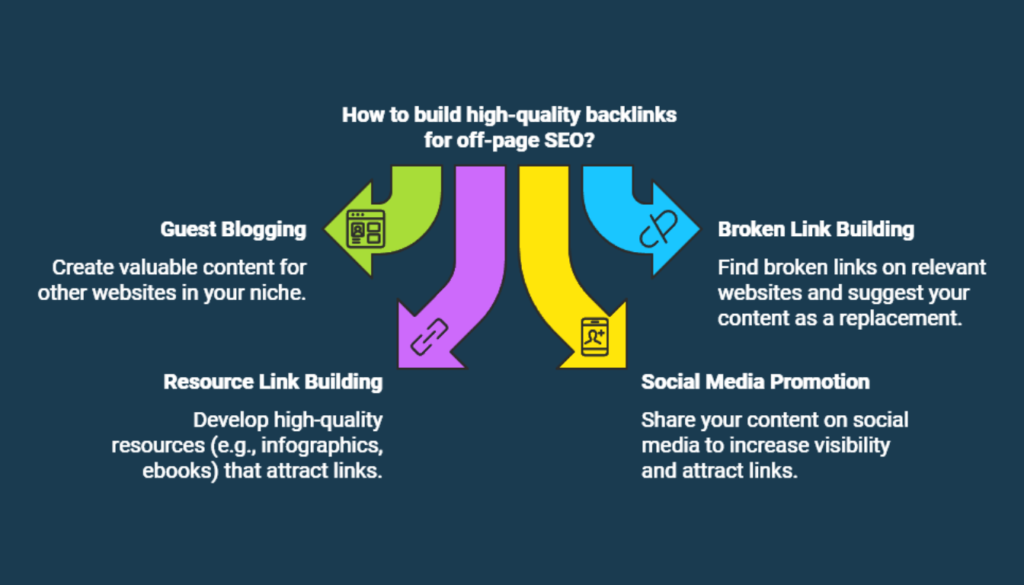
- Guest blogging: Write high-quality guest posts for other websites in your industry and include a link back to your website.
- Broken link building: Find broken links on other websites and offer your content as a replacement.
- Resource link building: Create valuable resources (e.g., infographics, ebooks, guides) that other websites want to link to.
- Social media promotion: Share your content on social media to increase visibility and attract link opportunities.
- Outreach and relationship building: Connect with website owners and influencers in your niche to build relationships and explore link-building opportunities.
| Link Building Strategy | Description |
| Guest Blogging | Create valuable content for other websites in your niche. |
| Broken Link Building | Find broken links on relevant websites and suggest your content as a replacement. |
| Resource Link Building | Develop high-quality resources (e.g., infographics, ebooks) that attract links. |
| Social Media Promotion | Share your content on social media to increase visibility and attract links. |
| Outreach and Relationship Building | Connect with influencers and website owners in your industry. |
Building Relationships with Other Websites
The most sustainable link building is relationship-driven. When you engage genuinely with others in your industry — contributing to conversations, collaborating on content, supporting others’ work — link opportunities arise naturally. These organic links carry more weight than transactional ones and build a network that pays dividends over time.
Technical SEO: The Backbone of Your Website
Technical SEO is the infrastructure layer that determines whether search engines can access, crawl, index, and understand your website in the first place. Even the best content and strongest backlinks won’t move rankings if Googlebot can’t reach or read your pages properly.
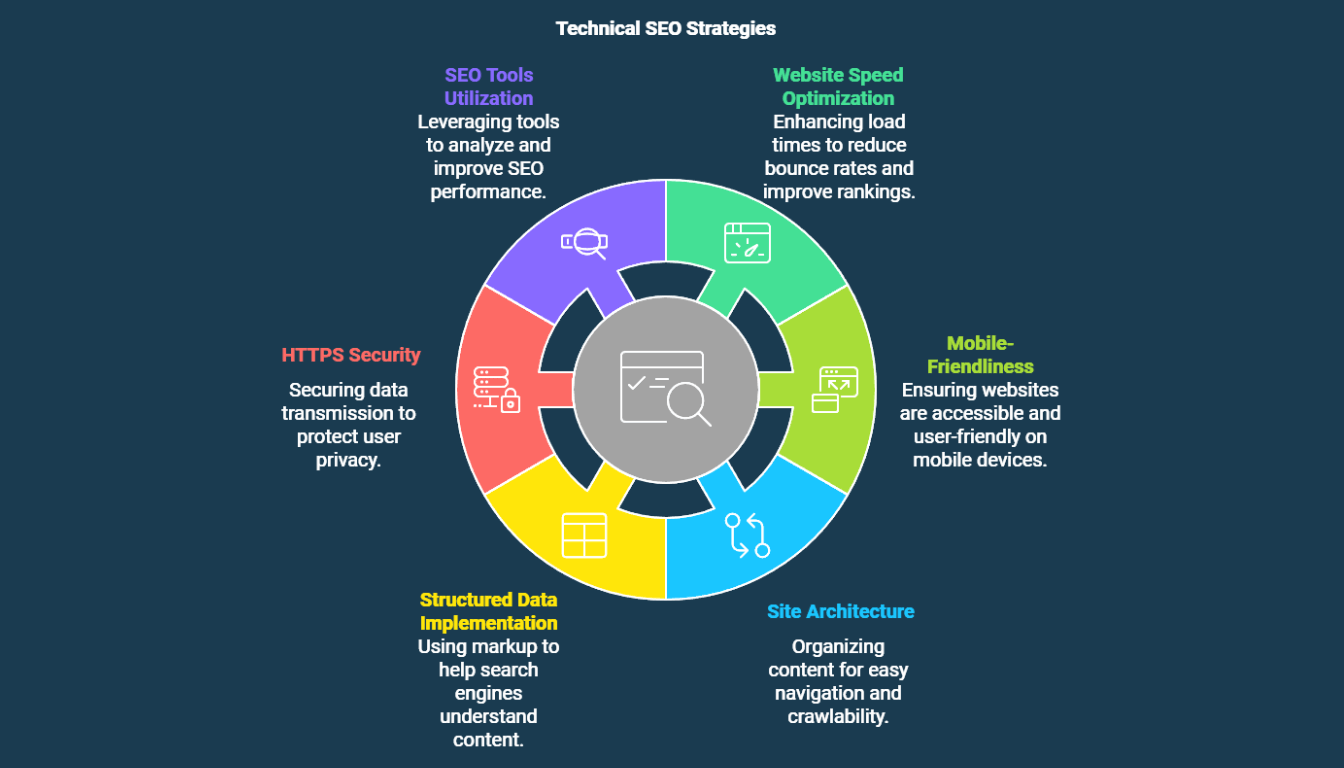
Website Speed and Performance Optimization
Page speed is a confirmed ranking factor and a direct conversion factor. Slow pages lose visitors before they load — and Google measures this through Core Web Vitals. Key factors that affect website speed:
- Image size: Large image files significantly slow down page load times. Compress images to reduce file size without sacrificing quality.
- Caching: Caching stores website data temporarily, allowing pages to load faster for returning visitors.
- Server response time: The time it takes for your server to respond affects every page load. Choose a reliable hosting provider with fast server response times.
- Code optimization: Minify HTML, CSS, and JavaScript files to reduce their size and improve performance.
- Content Delivery Network (CDN): A CDN delivers your content from servers close to each visitor’s location, reducing latency and improving load times globally.
Mobile-Friendliness and Responsive Design
Google uses mobile-first indexing — meaning it primarily crawls and ranks the mobile version of your site. A site that works well on desktop but poorly on mobile ranks poorly. Responsive design ensures your layout adapts cleanly to any screen size, providing a consistent experience across devices.
Site Architecture and Crawlability
- URL structure: Use clear, concise URLs that include relevant keywords.
- Internal linking: Create a logical internal linking structure that connects related pages and distributes link equity effectively.
- Navigation: A clear, intuitive navigation menu reduces friction for visitors and helps crawlers map your site.
- XML sitemaps: An XML sitemap lists all your pages and helps search engines discover and index content.
Implementing Structured Data
Structured data is markup added to your HTML that gives search engines explicit context about your content — what type of page it is, what entities it mentions, and what information it contains. Properly implemented structured data can unlock rich snippets in search results (star ratings, FAQ dropdowns, event dates), improving both visibility and click-through rates.
HTTPS and Website Security
HTTPS encrypts communication between your site and its visitors, protecting data and user privacy. Google treats HTTPS as a ranking signal and Chrome displays security warnings for HTTP sites — which erodes visitor trust and increases bounce rates. Every website should have an SSL certificate installed.
Tools for Technical SEO
- Google Search Console: A free tool that provides visibility into your site’s performance in Google search, including indexing issues, Core Web Vitals data, and manual actions.
- Screaming Frog: A website crawler that audits your site for technical SEO issues at scale.
- GTmetrix: Analyzes page speed and performance with actionable recommendations.
- Google’s Mobile-Friendly Test: Checks whether your pages meet Google’s mobile usability standards.
Measuring SEO Success and Tracking Progress
SEO without measurement is guesswork. Tracking your results is how you know which efforts are working, where to focus next, and whether your investment is generating return.
Key Performance Indicators (KPIs) for SEO
Track the metrics that connect directly to business outcomes. The most important SEO KPIs:
- Organic traffic: The number of visitors arriving from search results. Growth here is the clearest signal that your SEO is working.
- Keyword rankings: Your position in search results for target keywords. Improved rankings mean greater visibility.
- Backlinks: The number and quality of sites linking to you. A growing, high-quality backlink profile signals increasing authority.
- Conversion rates: The percentage of organic visitors who take a desired action. Traffic that doesn’t convert has limited business value.
- Bounce rate: The percentage of visitors who leave after viewing one page. High bounce rates can indicate content-intent mismatch or poor user experience.
- Average session duration: How long visitors spend on your site. Longer sessions suggest your content is engaging and relevant.
- Pages per session: How many pages visitors browse — a measure of how well your internal linking guides users through your content.
Using Google Analytics and Google Search Console
- Google Analytics provides in-depth data about your website traffic, user behavior, and conversions. Track organic traffic sources, analyze user demographics, and monitor goal completions.
- Google Search Console shows how your site performs in Google search specifically. Track keyword impressions and clicks, monitor Core Web Vitals, identify indexing issues, and submit sitemaps.
| Tool | Key Features |
| Google Analytics | -Track website traffic and user behavior -Analyze organic traffic sources -Monitor conversions and goal completions -Understand user demographics and interests |
| Google Search Console | -Track keyword rankings and impressions -Monitor website clicks and CTR -Identify and fix technical SEO issues -Submit sitemaps and request indexing |
Tracking and Analyzing SEO Progress
- Set clear goals: Define specific outcomes — increase organic traffic by 30%, rank in the top 5 for a target keyword.
- Track your KPIs: Monitor your chosen metrics consistently — monthly at minimum, weekly for active campaigns.
- Analyze your data: Look for patterns, identify underperforming pages, and find content gaps where you can capture additional traffic.
- Experiment and iterate: Test new approaches, measure the results, keep what works, and cut what doesn’t.
SEO Best Practices for Long-Term Success
SEO rewards consistency over shortcuts. The sites that dominate search results long-term are built on ethical practices and genuine value. Here are the principles that underpin sustainable SEO success.
Embrace White Hat SEO
White hat SEO follows search engine guidelines and focuses on providing genuine value to users. Black hat SEO attempts to game algorithms through tactics like keyword stuffing, cloaking, and buying backlinks. These methods may produce short-term gains, but they consistently lead to penalties, lost rankings, and reputational damage that’s hard to recover from.
| White Hat SEO | Black Hat SEO | |
| Focus | Providing value to users and following search engine guidelines | Manipulating search engine algorithms for quick rankings |
| Techniques | High-quality content, relevant keywords, ethical link building, technical optimization | Keyword stuffing, cloaking, hidden text, link farms, paid links |
| Results | Sustainable growth, long-term rankings, improved user experience | Short-term gains, potential penalties, damaged reputation |
Stay Up-to-Date with Google’s Algorithm Updates
Google updates its algorithms continuously — core updates, spam updates, and changes to how specific content types are evaluated. Staying informed isn’t optional if you want rankings that hold. The best sources:
- Google Search Central Blog: The official source for algorithm update announcements and guidance.
- SEO industry publications: Search Engine Journal, Search Engine Land, and Moz provide expert analysis on updates as they happen.
- SEO conferences and webinars: Industry events keep you connected to what practitioners are seeing in real data.
Create a Sustainable SEO Strategy
- Regularly publishing high-quality content: Keep your site fresh with new content that serves your audience.
- Building high-quality backlinks: Continuously earn links from reputable sites in your industry.
- Monitoring your website’s performance: Track your KPIs and use the data to identify and address weaknesses.
- Adapting to algorithm updates: Stay informed and adjust your strategies when Google changes how it evaluates content.
Prioritize User Experience (UX)
Google’s ranking systems increasingly reward pages that users actually prefer — fast, easy to navigate, mobile-friendly, and accessible. User experience and SEO are no longer separate disciplines; the best UX is increasingly the best SEO.
- Fast loading: Optimize for Core Web Vitals, especially Largest Contentful Paint (LCP) and Time to First Byte (TTFB).
- Mobile-friendly: Ensure your site works well on every screen size.
- Easy to navigate: Clear structure, logical menus, and helpful internal links.
- Accessible: Design for users with disabilities — alt text, proper contrast, keyboard navigability.
- Secure: HTTPS is non-negotiable.
Your Path to SEO Mastery
You’ve now covered the full landscape of SEO — from keyword research and on-page optimization to technical foundations, link building, measurement, and long-term strategy. These aren’t abstract concepts; they’re the specific levers that determine whether your site gets found or stays invisible.
SEO rewards consistency and patience. The sites that rank well year after year are the ones that put in the work methodically — creating content people actually want, earning links through genuine value, fixing technical issues before they compound, and tracking results so they can improve. That’s the playbook, and it works.
The best next step is to start. Pick one area — keyword research, a technical audit, a content update — and move on it this week. Progress compounds.
Ready to take your SEO to the next level?
- Get a free SEO audit: SEO Audit
- Contact us for a free consultation: Contact Us Now!
Frequently Asked Questions
Common questions about SEO — answered directly.
What is the difference between SEO and SEM?
SEO focuses on earning rankings in organic search results through content quality, authority, and technical optimization — without paying per click. SEM primarily involves paid advertising such as Google Ads, where you pay to appear in prominent positions for specific keywords.
How long does it take to see results from SEO?
SEO is a long-term investment. Minor improvements may appear within weeks, but significant ranking gains typically take three to six months of consistent effort. The timeline depends on how competitive your industry is, how established your domain is, and the quality of your strategy.
How much does SEO cost?
SEO costs vary widely based on scope, competition, and whether you hire an agency, a consultant, or do it in-house. Competitive industries require more resources and therefore more investment than lower-competition niches.
What are the most important SEO ranking factors?
Google evaluates hundreds of signals, but the most influential are: content quality and relevance, backlinks from authoritative sites, Core Web Vitals and page experience, mobile-friendliness, HTTPS security, and clear site architecture that search engines can crawl efficiently.
How can I learn more about SEO?
Start with Search Engine Journal, Search Engine Land, and Moz for current analysis and practical guidance. Google’s own Search Central documentation is the authoritative source on how Google works. SEO courses, certifications, and community forums keep you connected to what practitioners are seeing in real data.
What is the difference between SEO and PPC?
SEO earns rankings in organic search results through content, authority, and technical optimization — traffic is free once you rank. PPC involves paying for ads to appear at the top of search results. SEO is slower to build but compounds over time; PPC delivers immediate traffic but stops the moment you stop paying.
What are some common SEO mistakes to avoid?
- Keyword stuffing: Overloading content with keywords harms readability and can trigger penalties.
- Duplicate content: Identical content across multiple pages confuses search engines and dilutes authority.
- Ignoring mobile optimization: With mobile-first indexing, a poor mobile experience directly hurts rankings.
- Neglecting technical SEO: Slow load times, broken links, and crawl errors quietly undermine everything else.
- Buying backlinks: Paid links from low-quality sources can trigger manual penalties and long-term ranking damage.
How can I improve my website’s SEO myself?
- Conduct keyword research: Identify what your audience actually searches for.
- Create high-quality content: Write for users first, optimize for search engines second.
- Fix technical issues: Run a site audit, address slow pages, broken links, and indexing problems.
- Build backlinks: Earn links by creating content worth linking to and promoting it through outreach.
- Use free tools: Google Search Console and Google Analytics give you the data you need to improve without spending anything.
What is local SEO, and why is it important?
Local SEO optimizes your online presence to attract customers from a specific geographic area. It’s essential for businesses with a physical location or those serving a defined region. Key elements include Google Business Profile optimization, consistent local citations across directories, location-based keywords, and actively building positive customer reviews.
How can I track my website’s SEO performance?
Use Google Analytics to track organic traffic, user behavior, and conversion rates. Use Google Search Console to monitor keyword rankings, impressions, click-through rates, and technical issues. Together, these two free tools cover the core of SEO performance measurement.
What are some emerging trends in SEO?
- AI search optimization: With AI Overviews now appearing in the majority of searches, being cited by AI systems is an increasingly important visibility goal alongside traditional rankings.
- Voice search optimization: Conversational queries are growing with the spread of voice assistants — FAQ-style content and natural language answers perform well here.
- Core Web Vitals: Google’s page experience signals continue to grow in importance. LCP, CLS, and INP are the metrics to optimize.
- E-E-A-T: Google’s framework of Experience, Expertise, Authoritativeness, and Trustworthiness shapes how content quality is evaluated — particularly for YMYL topics.




5 Comments
Great post! It cleared up a lot of confusion for me.
Thank you for reading.
I like how you broke everything down step by step—super helpful.
Thanks for reading. Glad the article is helpful.
Wish you happiness