

Last updated on July 30th, 2026 at 08:25 pm
Your hosting provider is the infrastructure everything else depends on. A slow server tanks your landing page experience scores in Google Ads. An unreliable host takes your site down mid-campaign. Poor performance on Core Web Vitals quietly drains your organic rankings. For digital marketers, web hosting isn't a background technical decision — it directly affects campaign ROI, SEO results, and whether visitors convert or bounce.
Digital marketers face hosting challenges that general users don't: absorbing traffic surges during successful campaigns, maintaining sub-two-second load times for paid landing pages, and keeping integrations with analytics, CRM, and automation tools running without friction. The five providers below are the best web hosting services that hold up under those demands.
Here's where each one excels:
- Hostinger: Best for beginners and AI-powered tools
- SiteGround: Best for WordPress and SEO
- DreamHost: Best for businesses and scalability
- Namecheap: Best for value and domain management
- A2 Hosting: Best for speed and performance
Web Design and Development: The Definitive Guide
Top Web Hosting Services for Digital Marketers
Each provider below brings distinct strengths to the table. Match your priorities — cost, WordPress performance, scalability, value, or raw speed — to find the right fit for your digital marketing needs.
Hostinger: (Best Web Hosting Services for Beginners and AI-Powered Tools)
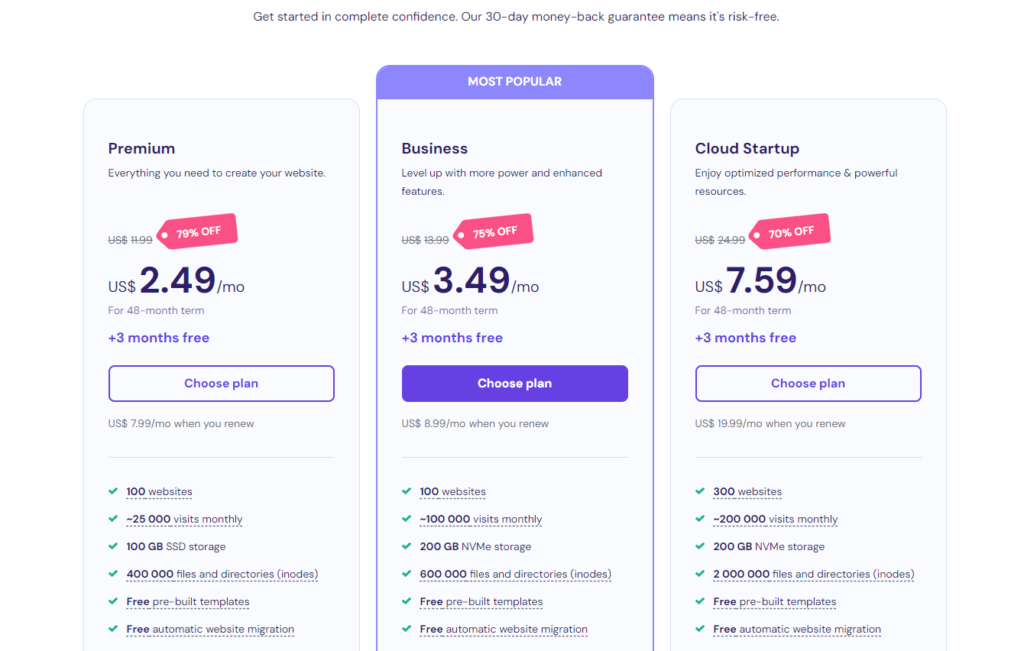
Hostinger is the clearest choice for marketers who need capable hosting without a high price tag. The platform has invested heavily in its AI-powered website builder and management tools, making it genuinely accessible even for teams with limited technical resources — and without sacrificing the performance that paid campaigns demand.
Affordability is real here, not just marketing language. Entry plans cover the essentials: website builder, free SSL, generous storage, and 24/7 support. Global server locations mean fast delivery for international audiences, and their uptime track record is consistently strong.
Hostinger isn't just about simplicity and affordability. It also delivers impressive performance, with servers strategically located around the globe to ensure fast loading speeds for your website visitors.
| Feature | Details |
| Pricing | Starting at $2.49/month + 3 Months Free |
| Offers | Shared, Cloud, VPS hosting |
| Standout Features | AI-powered website builder, user-friendly interface, affordable plans, global server locations, 24/7 customer support |
Pros:
- Beginner-friendly: Easy to use, even for those with no technical experience.
- Affordable: Offers some of the cheapest hosting plans on the market.
- AI-powered tools: Simplifies website creation and management.
- Good performance: Fast loading speeds and reliable uptime.
Cons:
- Limited storage on lower-tier plans: You may need to upgrade as your website grows.
- Upselling: Can be aggressive with promoting add-ons during checkout.
SiteGround: (Best Web Hosting Services for WordPress and SEO)
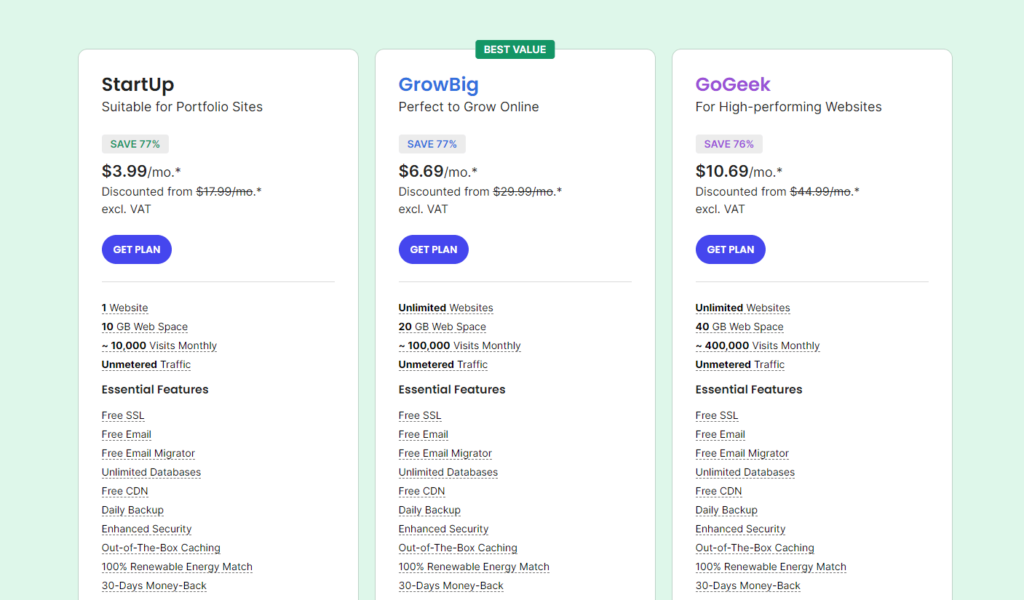
If WordPress is central to your digital marketing stack, SiteGround is the most purpose-built option on this list. Their infrastructure is explicitly optimized for WordPress performance — faster servers, built-in caching, automatic updates, and security enhancements that don't require plugin management.
For SEO-focused marketers, SiteGround's commitment to speed shows in practice. Staging environments let you test site changes before pushing them live, which matters when a misconfigured plugin can tank your page experience scores. Collaborative tools make managing client or team websites markedly cleaner.
| Feature | Details |
| Pricing | Starting at $3.99/month |
| Offers | Shared, WordPress, WooCommerce, Cloud hosting |
| Standout Features | WordPress optimization, excellent performance, staging environments, caching tools, strong security, collaborative tools |
Pros:
- Excellent for WordPress: Optimized for WordPress websites with specialized features.
- Top-notch performance: Fast loading speeds and reliable uptime.
- Strong security: Includes advanced security features and proactive monitoring.
- Great customer support: Highly regarded for its knowledgeable and responsive support team.
Cons:
- Higher renewal prices: Renewal rates are significantly higher than introductory prices.
- Limited storage: Storage space can be limited on some plans.
DreamHost: (Best Web Hosting Services for Business and Scalability)
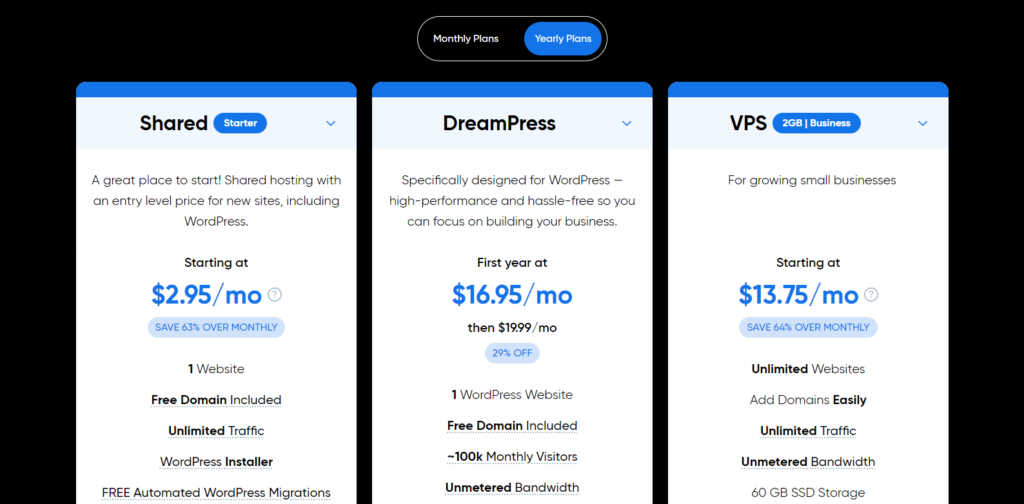
DreamHost suits established agencies and businesses that have outgrown starter hosting and need infrastructure that can scale alongside growth. Their range of hosting options — shared, VPS, dedicated, and cloud — means you're not forced into a painful migration every time your traffic or client list expands.
Security is taken seriously: free SSL, daily backups, and advanced firewall configuration are all included. Their open-source-friendly environment and developer tools make DreamHost a natural fit for technically capable marketing teams. The 97-day money-back guarantee is the longest in the industry — genuinely useful for extended evaluation.
| Feature | Details |
| Pricing | Starting at $2.95/month |
| Offers | Shared, WordPress, VPS, Dedicated, Cloud hosting |
| Standout Features | Robust security, generous storage, scalability, open-source technology, 97-day money-back guarantee |
Pros:
- Strong security: Prioritizes security with features like free SSL certificates and daily backups.
- Scalability: Offers a range of hosting options to accommodate growth.
- Developer-friendly: Supports open-source technology and provides developer tools.
- Generous money-back guarantee: Provides ample time to try their services risk-free.
Cons:
- Limited live chat support: Live chat support is not available 24/7.
- Can be more expensive: Some plans can be pricier compared to competitors.
Namecheap: (Best Web Hosting Services for Value and Domain Management)
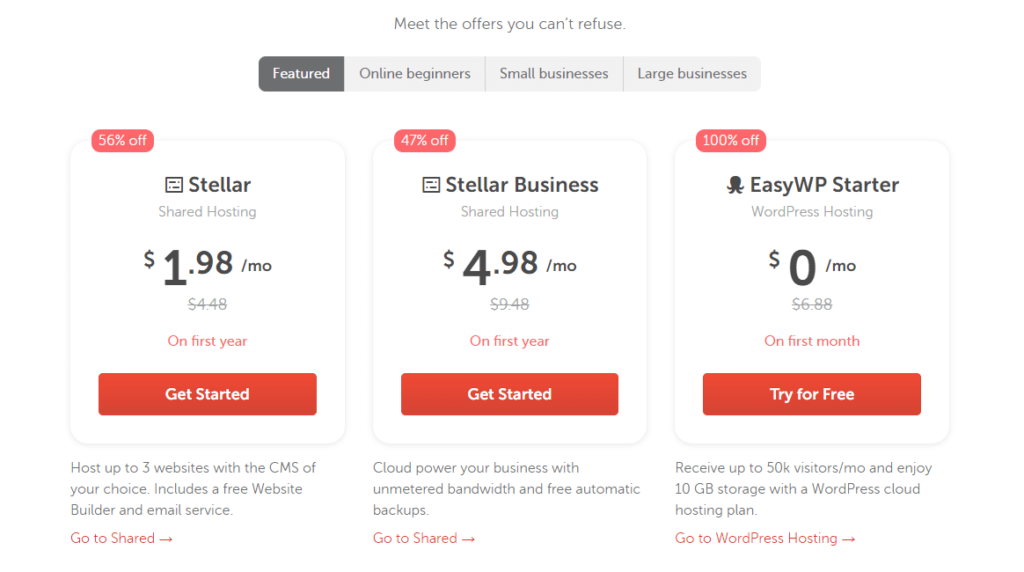
Namecheap earns its place by offering solid, no-frills hosting at prices that leave room in the budget for the campaigns that actually drive revenue. For marketers who need a reliable home for client sites or lower-traffic properties without overpaying, Namecheap delivers the essentials cleanly.
The domain management angle is a real practical advantage — handling registrations, renewals, and hosting in one place reduces administrative overhead. Free SSL and CDN inclusion at entry prices is a genuine value-add. The trade-off is that performance can be inconsistent on lower-tier plans, and customer support response times vary.
| Feature | Details |
| Pricing | Starting at $1.98/month |
| Offers | Shared, WordPress, Reseller, VPS, Dedicated servers |
| Standout Features | Affordable plans, domain management tools, free SSL certificates, CDN included, user-friendly interface |
Pros:
- Very affordable: Offers some of the most budget-friendly hosting plans.
- Domain management: A leading domain registrar, making it easy to manage both domain and hosting.
- Good value: Provides essential features at a low cost.
Cons:
- Mixed performance: Website speed and uptime can be inconsistent.
- Basic support: Customer support can be slow to respond.
A2 Hosting: (Best Web Hosting Services for Speed and Performance)
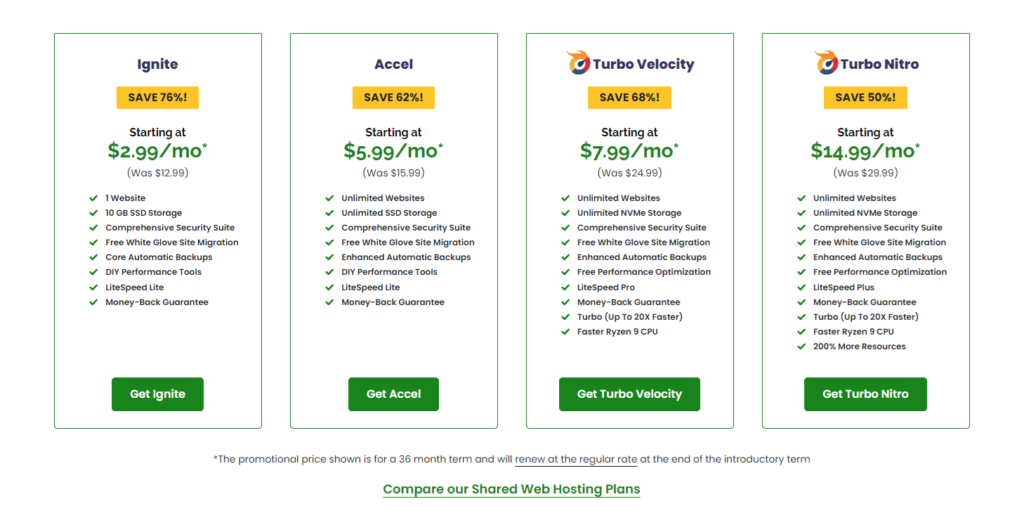
Speed is A2 Hosting's defining characteristic, and for digital marketers running paid traffic, that matters directly. Google's page experience signals penalize slow landing pages — and A2's Turbo servers are engineered to minimize those penalties. If your campaigns are driving significant traffic to conversion pages, A2 is the provider most focused on the performance dimension of that problem.
The platform covers a full range of hosting types, from shared to dedicated, with a free CDN included to extend the speed advantage globally. The anytime money-back guarantee reflects genuine confidence in the product.
| Feature | Details |
| Pricing | Starting at $2.99/month |
| Offers | Shared, WordPress, VPS, Dedicated, Reseller hosting |
| Standout Features | Turbo servers for speed, optimized hosting environment, free CDN, anytime money-back guarantee |
Pros:
- Excellent speed: Known for its fast loading speeds and optimized servers.
- Anytime money-back guarantee: Offers a prorated refund at any time.
- Variety of hosting options: Caters to different needs and budgets.
Cons:
- Higher renewal prices: Renewal rates are significantly higher than introductory prices.
- Support can be inconsistent: Customer support quality can vary.
Key Factors to Consider When Choosing the Best Web Hosting Services
Not all hosting decisions are equal — the right provider for a personal blog is not the right one for a digital marketer running Google Ads campaigns or managing multiple client sites. These are the factors that matter most in a marketing context.
Website Speed and Performance
Website speed optimization isn't just a technical nicety — it has direct financial consequences. Every additional second of load time increases bounce rates, reduces conversion rates, and lowers your Quality Score in paid campaigns. Google's Core Web Vitals, which measure loading, interactivity, and visual stability, are now explicit ranking factors.
When evaluating hosting for speed, look beyond the marketing claims. Check for server-level caching, SSD or NVMe storage, CDN availability, and real-world Time to First Byte (TTFB) benchmarks. A CDN distributes your content across multiple global servers so visitors load from whichever is closest — a meaningful advantage for any site with an international or distributed audience.
Security
For digital marketers handling customer data, email lists, or payment information, security isn't optional — a breach damages client trust in ways that are hard to recover from. Your hosting environment is the first layer of defense.
Look for hosts that include SSL certificates, server-side firewalls, malware scanning, and regular automated backups. DDoS protection matters for any site running paid traffic, where a targeted attack during a campaign launch can cost thousands in wasted ad spend. Regular backups with point-in-time restore give you a safety net against both attacks and human error.
Customer Support
Good support is invisible when things work and invaluable when they don't. For marketers, that moment often coincides with the worst possible time — a campaign launch, a product announcement, a peak traffic day.
Evaluate support by looking at independently verified response times and resolution rates, not just the provider's own claims. Live chat and phone support are what you need in an emergency. Providers with strong reputations in web hosting reviews from real users are generally the reliable choice.
Pricing and Plans
The headline number is rarely the real number. Introductory discounts are standard across the industry — the question is what you'll actually pay at renewal. A host that's $2.99/month for the first year but $12.99/month thereafter costs significantly more over three years than one with flat pricing.
Match your plan to your actual requirements: traffic volume, number of sites, storage needs, and whether you need managed WordPress or developer-level access. Don't buy more than you need now, but leave room to scale without a disruptive migration.
Web Hosting and Digital Marketing Success
The connection between hosting quality and marketing outcomes is direct and measurable. These are the three areas where it shows up most clearly.

SEO and Web Hosting
Search engine optimization and hosting performance are tightly linked. Website speed, uptime, and security are all factors Google uses when evaluating pages for rankings — and they all live at the hosting layer.
Choosing the best web hosting for SEO means selecting a provider that treats performance as a core product feature, not an upsell. Look for SSD storage, optimized server configurations, and uptime guarantees backed by SLAs. A fast, reliable, secure website earns better rankings and delivers a better experience to the visitors those rankings bring — a compounding advantage that grows over time.
Content Marketing and Web Hosting
Content marketing generates traffic at scale when it works well — which means your hosting needs to handle it. A pillar page earning organic traffic across dozens of keywords, a video resource attracting thousands of views, a campaign that goes viral: all of these create load spikes that underprepared hosting simply can't absorb cleanly.
Make sure your plan provides sufficient storage space and bandwidth to handle large media files and traffic spikes from successful content campaigns. A robust hosting environment ensures your content loads quickly and smoothly, keeping your audience engaged and your bounce rate in check.
Paid Advertising and Web Hosting
Every dollar you spend on paid traffic is only as good as the page it lands on. If your landing page loads in four seconds, a meaningful percentage of clicks you paid for will leave before it finishes loading — and you'll pay for those clicks regardless.
For paid advertising campaigns, choose hosting that can handle traffic spikes without compromising performance. Scalable cloud or VPS solutions are particularly well-suited here: they expand automatically when traffic surges and contract when it subsides, keeping your cost-per-acquisition in check even when campaigns overperform expectations.
What is Digital Marketing? Your Best Guide!
Final Thoughts
The right hosting provider for a digital marketer isn't the cheapest one or the most well-known one — it's the one that reliably supports the work. Speed for paid campaigns. Uptime for SEO. Security for client data. Scalability for growth. Support for when things go wrong.
Assess your current needs honestly, look at where you're heading in the next 12 to 18 months, and choose a provider built to support both. The five options above cover the full range of digital marketing use cases — prioritize the factors that matter most to your specific situation and you'll find the right fit.
Frequently Asked Questions (FAQs)
A few questions that come up often when marketers are evaluating hosting providers:
What are the best web hosting services for small businesses?
The best web hosting services for small businesses combine affordable plans with the features that matter most at that scale: a user-friendly interface, website builder, email hosting, and basic security. Hostinger, SiteGround, and Namecheap are all strong options depending on your priorities.
How much do web hosting services cost?
The cost of web hosting varies widely depending on the type of hosting (shared, VPS, dedicated, cloud), the features included, and whether you're looking at introductory or renewal pricing. Shared hosting starts as low as a few dollars per month; dedicated servers can run several hundred. Always calculate the multi-year total cost, not just the first-term rate.
What is the difference between shared hosting and VPS hosting?
Shared hosting means your website shares a physical server and its resources with other websites. VPS hosting gives your site a dedicated portion of a server with guaranteed resources — more control, better performance, and greater stability under traffic spikes.
Do I need a CDN with my web hosting?
A CDN is highly recommended for any site with a distributed or international audience. It improves load times by delivering your content from servers geographically close to each visitor, reducing latency. Many hosts include a CDN in their plans — it's worth confirming before you sign up.
How important is website security for digital marketing?
Critical. A security breach damages your reputation with clients and customers in ways that are difficult to repair. Beyond the direct harm, compromised sites can be blacklisted by Google, which wipes out your organic rankings overnight. Strong hosting-level security is a non-negotiable baseline.
What is an SSL certificate, and why do I need it?
An SSL certificate encrypts data transmitted between your website and visitors, securing connections and protecting sensitive information. It's required for any site collecting user data or processing payments, and Google uses HTTPS as a minor ranking signal. Most reputable hosts include SSL for free.
How do I choose the right web hosting plan for my needs?
Start with your actual traffic volume and storage requirements. If you're just starting out, shared hosting is a sensible entry point. As traffic grows — or if you're running paid campaigns that create unpredictable spikes — move to VPS or cloud hosting. Factor in the number of sites you need to manage and whether you need managed WordPress support.
Can I switch web hosting providers if I'm not satisfied?
Yes. Most providers offer website migration services to assist with the process, and many will migrate your site for free. It's worth reading the migration policy before you commit to a new host.
What is uptime, and why is it important?
Uptime is the percentage of time your website is accessible online. High uptime means visitors can always reach your site and search engine crawlers can always index it. Even brief periods of downtime during high-traffic moments — a campaign launch, a product release — can mean real lost revenue.
What is bandwidth, and how much do I need?
Bandwidth is the volume of data that can be transferred between your website and its visitors within a given period. If your site uses large media files or receives significant traffic, you need more bandwidth. Most modern hosts offer unmetered bandwidth on mid-tier plans and above — verify what's included before committing.